
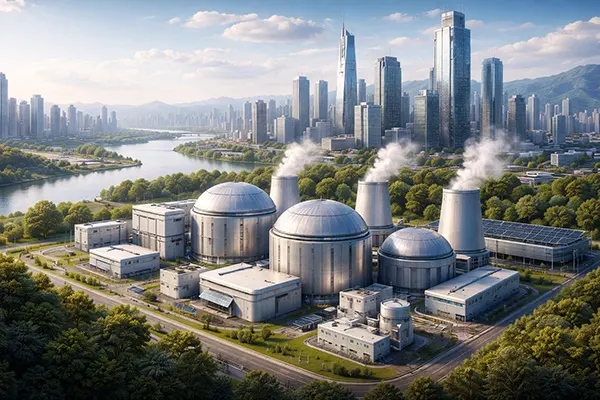
Cities are under growing pressure to secure reliable electricity, reduce carbon emissions and protect residents from price shocks in volatile fuel markets. By 2026, urban authorities across Europe, North America and parts of Asia are reassessing long-term energy strategies in light of electrified transport, heat pumps and data-driven infrastructure. Small Modular Reactors (SMRs) have emerged as one of the most discussed technological options for delivering low-carbon baseload power close to demand centres without the scale and construction risk traditionally associated with large nuclear plants.
What Small Modular Reactors Are and How They Differ from Conventional Nuclear Plants
Small Modular Reactors are nuclear fission systems typically producing up to 300 megawatts of electric power per unit, although some advanced designs range between 50 and 470 megawatts. Unlike conventional gigawatt-scale reactors, SMRs are designed for factory fabrication and modular assembly. Major components are manufactured in controlled industrial settings and transported to site, reducing on-site construction complexity and theoretically shortening build timelines.
From a technical perspective, most near-term SMR projects rely on light-water reactor technology, similar to existing nuclear fleets, but in a more compact configuration. Designs such as NuScale’s VOYGR in the United States, Rolls-Royce SMR in the United Kingdom and GE Hitachi’s BWRX-300 in Canada and Poland focus on simplified safety systems, natural circulation cooling and reduced numbers of active mechanical components.
For urban energy systems, the modular concept is particularly relevant. Instead of constructing a single massive unit, municipalities or regional utilities could deploy several smaller modules over time, aligning capacity additions with demand growth. This staged approach is intended to lower financial exposure and provide flexibility in expanding low-carbon generation.
Design Features Relevant to Dense Urban Environments
Safety is central when discussing nuclear technology near populated areas. Modern SMR designs emphasise passive safety systems, which rely on gravity, natural convection and pressure differentials rather than external power or operator action. In many concepts, the reactor vessel and containment are installed below ground level, adding a physical barrier against external hazards and potential impacts.
Another urban advantage lies in the smaller physical footprint. An SMR facility generally requires significantly less land than a traditional nuclear power station. This makes it possible to consider deployment on existing industrial or energy sites, including former coal plant locations where grid connections, cooling water access and transport infrastructure already exist.
Some advanced designs also offer high-temperature output suitable for district heating and industrial steam. In colder European cities, where district heating networks are well established, this co-generation capability could reduce reliance on natural gas boilers and improve overall energy efficiency by using both electricity and thermal output.
Economic Viability and Real-World Projects as of 2026
As of 2026, SMRs remain at the early commercialisation stage. Several projects have moved into licensing or early construction phases, but large-scale deployment has not yet been achieved. Canada has taken a leading role, with Ontario Power Generation advancing the BWRX-300 project at the Darlington site, expected to be among the first grid-connected SMRs in a G7 country later in the decade.
In the United Kingdom, the Rolls-Royce SMR programme continues through the Generic Design Assessment process with the Office for Nuclear Regulation. The government has signalled support for a fleet approach, aiming to standardise reactor design and create a domestic supply chain that can reduce costs through repetition and serial production.
However, economic assessments remain mixed. While proponents argue that modularisation and factory fabrication will drive down costs, independent analyses highlight uncertainties in financing, first-of-a-kind engineering expenses and long regulatory timelines. For cities considering SMRs, the cost per megawatt hour must compete not only with gas and nuclear, but also with rapidly expanding renewables combined with grid-scale storage.
Financing Models and Risk Allocation
One of the central challenges for urban deployment is capital intensity. Even smaller reactors require billions in upfront investment. Governments are therefore exploring regulated asset base models, state equity participation and long-term power purchase agreements to reduce investor risk and lower borrowing costs.
For municipal energy authorities, participation may involve joint ventures with national utilities or infrastructure funds. Clear allocation of construction risk, operational liability and decommissioning responsibility is essential to ensure that local taxpayers are not exposed to uncontrolled financial obligations.
Another economic factor is lifecycle management. SMRs are typically designed for operational lifetimes of 40 to 60 years. Urban planners must integrate long-term waste management strategies, including interim storage and eventual geological disposal, into financial modelling from the outset rather than deferring these costs to future generations.
Integration into Urban Grids and Environmental Considerations
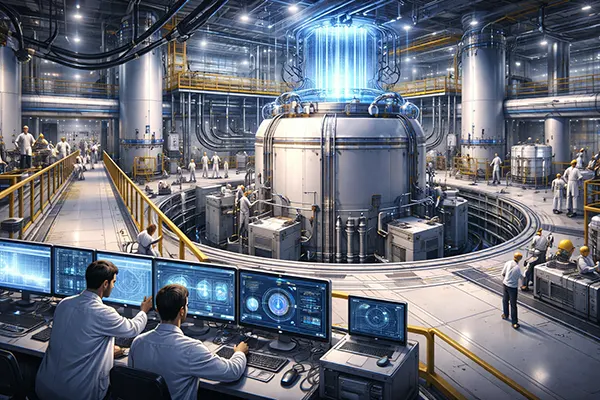
Urban electricity systems in 2026 are increasingly decentralised and digitised. Rooftop solar, battery storage, electric vehicle charging networks and smart demand management are reshaping load profiles. An SMR connected to a city grid would provide stable baseload output, supporting frequency stability and compensating for intermittency in wind and solar generation.
Grid integration requires careful planning. Transmission capacity must be sufficient to distribute power from the reactor site to demand centres, and cybersecurity standards must address digital control systems. In densely populated regions, public consultation and transparent safety communication are as important as engineering performance.
From an environmental standpoint, lifecycle greenhouse gas emissions of nuclear power are comparable to wind and significantly lower than fossil fuels. Nevertheless, concerns remain regarding radioactive waste, accident scenarios and water usage for cooling. Urban deployment proposals therefore undergo stringent environmental impact assessments and regulatory review before approval.
Public Acceptance and Regulatory Frameworks
Public perception plays a decisive role in whether SMRs can become part of urban energy strategies. Trust is built through independent oversight, clear emergency planning and open access to safety data. Lessons from past nuclear incidents continue to shape regulatory culture, particularly in Europe.
Regulators in countries pursuing SMRs are updating frameworks to accommodate modular construction and factory-built components. Harmonisation of standards across jurisdictions could reduce duplication of effort and shorten approval timelines, but national sovereignty over nuclear safety remains strong.
Ultimately, the viability of SMRs in cities depends not only on engineering feasibility but also on democratic legitimacy. Urban residents expect reliable, affordable and clean energy. Whether small modular reactors can meet those expectations at scale will become clearer as the first commercial units move from design to operation in the late 2020s.