
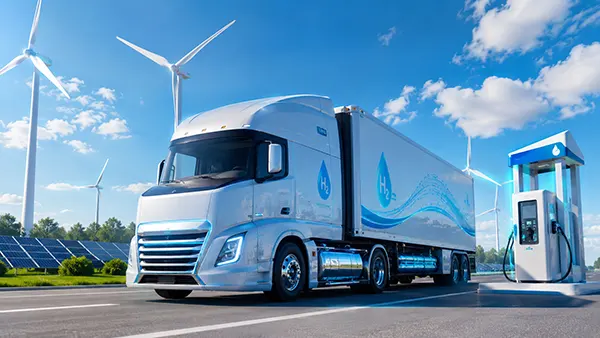
European countries are increasing investments in hydrogen-powered transport as pressure grows to reduce emissions from freight logistics, shipping and long-distance road transport. Heavy vehicles remain one of the most difficult sectors to decarbonise because batteries are often too heavy for long-haul operations and charging infrastructure is still limited on major freight corridors. Hydrogen engines and fuel cell systems are now receiving support from governments, manufacturers and energy companies that view this technology as a practical option for reducing dependence on diesel while maintaining transport efficiency. By 2026, several European states have already launched hydrogen mobility projects connected to ports, industrial zones and cross-border logistics routes.
The Main Reasons Europe Supports Hydrogen Transport
One of the biggest reasons behind European investment is the need to meet climate targets established under the European Green Deal. Heavy trucks, buses and industrial transport vehicles generate a considerable share of transport emissions across the EU. While electric passenger cars are expanding rapidly, heavy transport requires different technical solutions because freight vehicles travel longer distances and often operate continuously. Hydrogen allows faster refuelling compared with battery charging and can support transport companies that cannot afford long downtimes.
Another important factor is energy independence. Since the energy crisis caused by geopolitical instability in recent years, European governments have been looking for alternatives to imported fossil fuels. Hydrogen can be produced domestically using renewable electricity from wind and solar power stations. Countries such as Germany, the Netherlands, Spain and France are increasing investment in green hydrogen production facilities to reduce exposure to volatile oil and gas markets. This approach also supports regional energy security and industrial development.
European manufacturers are also trying to maintain competitiveness in the global transport industry. Companies including Volvo, Daimler Truck, MAN and Iveco are already testing hydrogen-powered heavy vehicles for logistics and public transport. European policymakers believe early investment could help local industries remain competitive against manufacturers from China and North America, where hydrogen transport technologies are also developing rapidly. Research funding and industrial partnerships are therefore becoming central parts of European transport policy.
How Hydrogen Engines Differ from Battery Transport
Hydrogen transport technologies generally fall into two categories: hydrogen combustion engines and hydrogen fuel cell systems. Combustion engines operate similarly to traditional internal combustion engines but use hydrogen instead of diesel. Fuel cells, meanwhile, convert hydrogen into electricity that powers electric motors. Both systems are being tested across Europe, although fuel cell vehicles currently receive more investment because of their higher efficiency and lower direct emissions.
Battery-electric transport remains effective for urban delivery services and short-distance operations, but long-haul logistics face limitations linked to battery weight, charging times and grid capacity. Hydrogen systems can offer longer driving ranges while preserving cargo space and payload capacity. This is particularly important for sectors such as refrigerated logistics, construction transport and international freight operations that require continuous movement over hundreds of kilometres.
Infrastructure requirements also differ significantly. Battery charging hubs require substantial electricity grid upgrades, while hydrogen refuelling stations require storage, compression and transport systems. Europe is currently attempting to develop both technologies simultaneously rather than relying on a single solution. Several EU-backed transport corridors already include plans for hydrogen stations positioned along major freight routes connecting ports, manufacturing centres and logistics terminals.
Industrial and Economic Benefits of Hydrogen Projects
Hydrogen investment is not limited to transport alone. European authorities increasingly see hydrogen as part of a broader industrial strategy involving steel production, chemical manufacturing and renewable energy storage. Heavy transport projects therefore support wider economic goals by creating demand for hydrogen production and distribution infrastructure. Governments expect this interconnected approach to strengthen industrial activity while supporting climate commitments.
Large-scale hydrogen projects are also generating employment opportunities. New facilities require engineers, infrastructure specialists, transport operators and energy technicians. Regions with declining fossil fuel industries are attempting to transition towards hydrogen-related industries in order to preserve skilled jobs and industrial capacity. Several former oil and gas companies are already participating in hydrogen transport development by adapting existing energy infrastructure for future hydrogen distribution networks.
Financial support remains essential because hydrogen technologies are still expensive compared with diesel systems. European governments and EU institutions continue to provide subsidies, research grants and infrastructure funding to accelerate commercial adoption. Programmes such as the EU Hydrogen Strategy and the Alternative Fuels Infrastructure Regulation are designed to reduce investment risks for transport operators and manufacturers. Without this support, large-scale deployment would likely progress much more slowly due to high production and infrastructure costs.
Which European Countries Lead Hydrogen Development
Germany currently remains one of the strongest supporters of hydrogen transport. The country has invested heavily in hydrogen rail projects, truck testing programmes and industrial hydrogen production. German manufacturers are cooperating with logistics companies to evaluate hydrogen vehicles under real operating conditions across freight networks and industrial transport routes.
France is focusing on hydrogen buses, regional mobility systems and industrial decarbonisation. The French government continues to finance hydrogen innovation through public-private partnerships and national investment programmes. Hydrogen mobility projects are particularly active near industrial ports and manufacturing regions where demand for low-emission transport is growing rapidly.
The Netherlands has become an important hydrogen logistics hub because of its ports and energy infrastructure. Rotterdam is developing hydrogen import and distribution facilities that may support both transport and industrial sectors. Scandinavian countries are also increasing activity in hydrogen shipping and heavy vehicle testing, particularly in sectors connected to mining, forestry and maritime logistics.
The Challenges Facing Hydrogen Heavy Transport
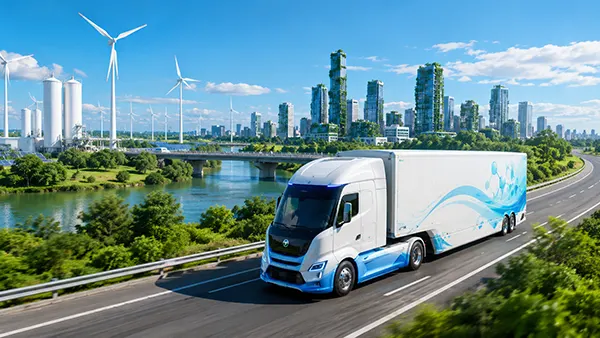
Despite growing investment, hydrogen transport still faces several obstacles. One of the largest problems is cost. Green hydrogen production remains expensive because it depends heavily on renewable electricity and advanced electrolysis systems. Heavy vehicles powered by hydrogen also cost significantly more than conventional diesel trucks, which limits adoption among smaller logistics companies.
Infrastructure expansion remains another major challenge. Europe currently lacks a fully developed hydrogen refuelling network capable of supporting large commercial fleets across multiple countries. Transport operators require reliable access to fuel stations before they can replace diesel fleets on a larger scale. Building this infrastructure requires coordination between governments, energy companies and vehicle manufacturers, which takes time and substantial financial investment.
Questions about efficiency also continue to influence industry debate. Some experts argue that direct electrification remains more energy-efficient than hydrogen because hydrogen production, transport and conversion involve additional energy losses. Others believe hydrogen will remain necessary for sectors where batteries are impractical. By 2026, most European policymakers are supporting a mixed strategy that combines battery-electric transport with hydrogen systems depending on operational requirements.
The Future of Hydrogen Transport in Europe
The next decade will likely determine whether hydrogen becomes a major part of European transport infrastructure or remains limited to specific industrial sectors. Several truck manufacturers plan to expand hydrogen vehicle production before 2030, while energy companies continue building pilot refuelling corridors across the continent. Progress will depend heavily on production costs, renewable energy availability and political support.
Freight operators are increasingly interested in technologies that help reduce emissions without sacrificing operational flexibility. Hydrogen remains attractive for routes requiring long distances, heavy cargo and rapid refuelling. Ports, industrial hubs and cross-border logistics routes are expected to become the first areas where hydrogen fleets operate on a larger commercial scale.
Europe’s hydrogen strategy reflects a broader attempt to reshape transport and energy systems simultaneously. Investments in hydrogen engines and fuel cells are connected not only to climate goals but also to industrial competitiveness, energy security and technological independence. Although significant technical and economic challenges remain unresolved, hydrogen transport has already become an important part of Europe’s long-term heavy mobility strategy in 2026.