
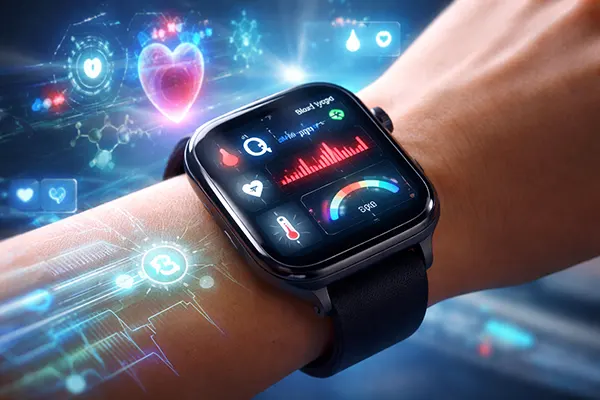
Wearable technology has evolved rapidly over the past decade. Early smartwatches and fitness bands mainly counted steps and measured heart rate, offering users a basic overview of daily activity. By 2026, however, wearable devices have become far more sophisticated. Advances in miniaturised sensors, machine learning, and biomedical engineering allow modern devices to monitor a wide range of physiological indicators that previously required specialised medical equipment.
Advanced Health Biometrics in Modern Wearables
One of the most important developments in wearable technology is the expansion of biometric monitoring. New generations of devices track far more than pulse rate, providing insights into overall physiological balance. Many current smartwatches include sensors that analyse blood oxygen saturation (SpO2), a metric that indicates how effectively oxygen is transported through the bloodstream.
Another significant innovation is continuous body temperature tracking. While temperature measurement was traditionally associated with medical thermometers, modern wearables can detect small fluctuations in skin temperature throughout the day and night. These patterns help identify early signs of illness, recovery after physical stress, or hormonal changes.
Some advanced wearables introduced around 2024–2026 also measure electrodermal activity. This metric reflects changes in skin conductivity that occur when the nervous system responds to stress or emotional stimuli. By combining this data with heart rate variability, devices can estimate stress levels with increasing accuracy.
Blood Oxygen, Temperature and Stress Indicators
Blood oxygen monitoring became widely available in consumer wearables during the early 2020s, but newer devices provide more consistent readings thanks to improved optical sensors. These sensors use multiple wavelengths of light to estimate oxygen saturation and detect trends over time rather than relying on single measurements.
Continuous temperature monitoring has also gained importance in health analytics. Some devices now identify patterns associated with sleep cycles, infection risk, or recovery after intensive training. Because these measurements are taken automatically every few minutes, they offer a detailed physiological timeline.
Stress analysis features combine multiple signals such as electrodermal activity, heart rate variability, and breathing patterns. By analysing these indicators together, wearables provide users with feedback about mental strain and suggest relaxation techniques or breathing exercises.
Sleep and Recovery Analytics
Sleep analysis has become one of the most valuable features of modern wearables. Early sleep trackers mainly detected movement, but new devices integrate several sensors to build a more accurate picture of nightly recovery. Heart rate variability, respiration rate, and body temperature changes are now commonly used to identify sleep stages.
Respiration monitoring is particularly important for detecting irregular breathing patterns. Devices released in recent years can identify breathing disturbances that may indicate conditions such as sleep apnoea. Although wearables are not medical diagnostic tools, they can highlight patterns that encourage users to seek professional advice.
Another emerging metric is recovery scoring. By analysing sleep quality, heart rate variability, and physical activity, wearables estimate how well the body has recovered overnight. This information helps athletes and regular users decide whether they should train intensely or allow more time for recovery.
Respiration Rate and Recovery Scores
Respiration rate tracking relies on motion sensors and optical heart sensors to estimate breathing frequency during rest and sleep. Changes in breathing rhythm can reveal fatigue, stress, or respiratory infections before other symptoms become obvious.
Recovery scoring systems combine multiple physiological indicators. Algorithms analyse nightly data such as heart rate variability, resting pulse, and sleep duration. When these indicators show positive trends, the body is likely well recovered and ready for physical effort.
If recovery metrics indicate fatigue, many wearable devices recommend lighter activity or extended rest. This approach has become especially popular among endurance athletes who rely on detailed physiological feedback to plan training schedules.
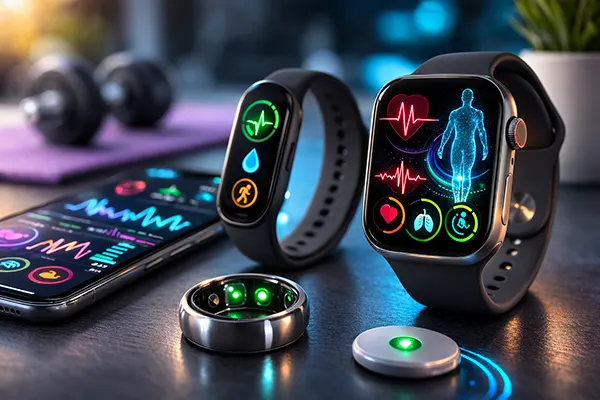
Metabolic and Cardiovascular Monitoring
Another area of rapid progress is metabolic monitoring. Several technology companies are experimenting with non-invasive glucose sensing. While continuous glucose monitoring traditionally required implanted sensors, research prototypes now use optical spectroscopy and advanced algorithms to estimate glucose trends through the skin.
Blood pressure estimation is another feature appearing in some modern wearables. These systems typically rely on pulse wave analysis rather than inflatable cuffs. By measuring how quickly blood pressure waves travel through arteries, devices can approximate blood pressure trends.
Cardiovascular monitoring has also expanded to include electrocardiogram capabilities. Many smartwatches allow users to record a short ECG reading by touching sensors on the device. These recordings can help identify irregular heart rhythms such as atrial fibrillation.
Glucose Tracking and Cardiovascular Insights
Non-invasive glucose tracking remains an active research field, but progress between 2023 and 2026 has been significant. Optical sensors analyse subtle changes in light absorption beneath the skin, while machine learning models interpret the resulting signals.
Pulse wave analysis provides another valuable cardiovascular metric. By measuring the time it takes for blood pressure waves to travel through arteries, wearables estimate arterial stiffness and overall cardiovascular health.
When combined with ECG measurements and heart rate variability data, these indicators create a more comprehensive picture of cardiovascular function. As sensor accuracy continues to improve, wearable devices are gradually becoming powerful personal health monitoring tools rather than simple fitness accessories.